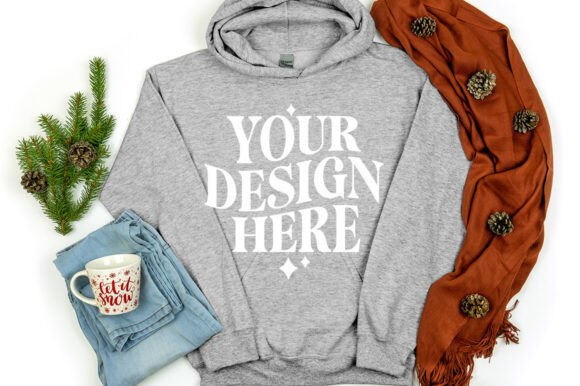
Reviewing the Christmas Gildan 18500 Hoodie Mockup
As a designer who has spent countless hours digitizing patterns and troubleshooting thread breaks, I approach every new asset with a critical eye. We often get caught up in the thrill of a fresh digital embroidery file, but the real test is how it translates from screen to stitch. Recently, I evaluated the Christmas Gildan 18500 Hoodie Mockup to determine its viability for upcoming holiday client projects. This isn’t just about pretty pictures; it’s about understanding how a design will behave on heavy cotton blends, how it appeals to buyers, and whether it holds up under the scrutiny of a commercial craft business.
First Impressions and Visual Mood
The immediate impression of this mockup is one of cozy, festive reliability. The Gildan 18500 is a staple in the apparel world for a reason—it is heavyweight, durable, and has a distinct texture that affects how embroidery sits on the surface. When viewing the Christmas Gildan 18500 Hoodie Mockup, the lighting and fabric rendering suggest a soft, brushed interior and a smooth exterior. For an embroidery designer, this visual cue is vital. It tells me that the design needs to account for the pile of the fabric. A design that looks sharp on a flat digital canvas might lose definition if the stitch density isn’t adjusted for the hoodie’s texture.
The mood here is traditional yet modern. It doesn’t scream "novelty"; instead, it suggests quality. This is crucial for Etsy sellers and boutique owners who are trying to move away from cheap, mass-produced feels. The mockup presents the garment in a way that highlights the chest area, the most common placement for logos and holiday motifs. It allows us to visualize how a satin stitch border or a dense fill stitch center will interact with the garment’s natural drape.
Real-World Application Scenarios
I recently worked with a client who wanted to launch a line of personalized family reunion sweatshirts. We needed to preview how their complex crest would look on a dark navy hoodie before committing to production. Using a high-quality printable mockup like this one saved us hours of physical sampling. By placing the design digitally, we could assess scale and proportion immediately.
Beyond sweatshirts, this type of visualization helps in planning other custom apparel. If you are creating a matching set that includes a tote bag design or an embroidered patch, seeing the hoodie in context helps maintain brand consistency. For example, if you are selling a winter bundle that includes a beanie and a hoodie, ensuring the thread colors match across different fabric textures is easier when you have a realistic reference point. The mockup serves as a bridge between the abstract embroidery project in your software and the tangible finished product in the customer’s hands.
Technical Considerations for Stitching
While the mockup is a visual tool, it informs technical decisions. The Gildan 18500 is a thick garment. When planning your machine embroidery design, you must consider stitch density. If the design in the mockup features intricate details, remember that on actual fleece-backed cotton, tiny details can get lost. I always advise checking the design on scrap fabric first. Use a sturdy stabilizer to prevent puckering, which is a common issue with hoodies due to their weight and stretch.
Pay close attention to thread colors. The mockup likely shows vibrant reds and greens, but on a dark hoodie, you may need to adjust your palette for better contrast. A running stitch outline might disappear on black fabric, whereas a wider satin stitch will pop. Also, consider the hoop size. The chest area of a hoodie is large, but hooping it correctly requires care to avoid distorting the neckline. The mockup helps you visualize the maximum printable area without crossing seams or hitting pockets.
Where to Use Caution
Not every design fits every garment. While the Christmas Gildan 18500 Hoodie Mockup is excellent for standard chest logos, be cautious with designs that require extreme precision on curved surfaces. If you are planning to embroider the hood itself or the sleeves, the mockup may not fully represent the difficulty of hooping those areas. Additionally, avoid overly dense designs if the hoodie is intended for active wear, as heavy stitching can reduce the fabric's breathability and comfort.
For baby embroidery or items that require frequent washing, ensure your digitizing accounts for shrinkage. The mockup shows a pristine, new garment, but real-life products undergo stress. Test your applique design or filled motifs on washed fabric to ensure they don’t pucker or distort after the first cycle. This is especially important for holiday gifts that are meant to be heirlooms.
Enhancing Brand Value and Customer Trust
In the world of small shop product sales, presentation is everything. A professional mockup elevates perceived value. When customers see a crisp, realistic image of your sweatshirt embroidery, they trust the quality of your work. It reduces hesitation and increases conversion rates. For commercial embroidery projects, providing clients with a realistic preview via tools like this mockup builds confidence and minimizes revision requests.
Furthermore, using consistent design assets across your social media and online store creates a cohesive brand identity. Whether you are selling personalized gift items or bulk orders for corporate events, the professionalism of your presentation reflects the professionalism of your stitching. It signals that you care about the final outcome, not just the sale.
Practical Designer Notes
- Test on Scraps: Always stitch out your design on the same fabric weight as the Gildan 18500 before starting the final piece.
- Check Contrast: Use the mockup to simulate different thread colors against various hoodie shades to ensure visibility.
- Verify Licensing: Before selling items made with designs previewed in this mockup, confirm the license terms of both the embroidery file and the mockup itself.
- Stabilizer Choice: Use a cut-away stabilizer for hoodies to provide long-term support and prevent distortion.
- Hoop Placement: Use the mockup to plan exact placement, ensuring the design is centered and balanced relative to the zipper or neckline.
In conclusion, the Christmas Gildan 18500 Hoodie Mockup is more than just a pretty picture; it is a strategic tool for any serious embroidery professional. It bridges the gap between digital creativity and physical production, helping you make informed decisions about stitch types, color choices, and placement. By integrating this resource into your workflow, you can enhance the quality of your handmade product offerings, streamline client communications, and ultimately build a more trustworthy and profitable craft business. Remember, the best embroidery is not just well-stitched; it is well-planned.