Reviewing the Snarky Skeleton Christmas Design
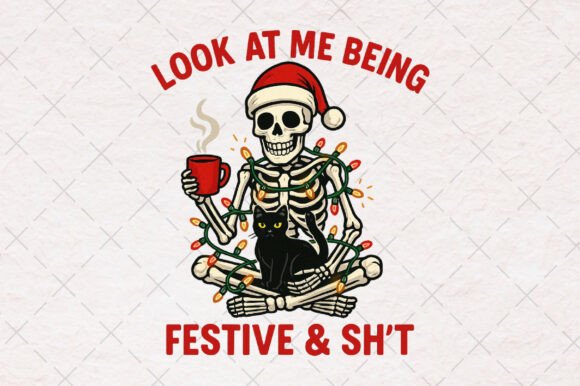
As a designer who has spent countless hours digitizing and stitching out holiday motifs, I have developed a keen eye for what works on fabric versus what only looks good on a screen. When I first loaded the Funny Christmas Png, Snarky Skeleton Png into my workspace, my initial reaction was one of amused appreciation. It is not your typical holly-and-ivy motif. Instead, it offers a subversive, humorous take on the season that resonates deeply with modern consumers who are tired of overly sweet or traditional holiday aesthetics. For embroidery designers and small business owners, this design represents a lucrative opportunity to tap into the growing market for alternative holiday decor and apparel.
First Impressions and Visual Personality
The mood of this design is immediately clear: playful, slightly irreverent, and undeniably festive in a dark-humor way. The skeleton motif is rendered with clean lines that suggest a strong visual personality. In the context of T-Shirt Designs, this kind of graphic thrives because it communicates a specific attitude. However, translating a PNG concept into a tangible machine embroidery design requires careful consideration of how those lines will translate into thread.
The layout appears balanced, which is crucial for maintaining structural integrity during stitching. A snarky skeleton needs to look sharp, not messy. If the original digital asset has high contrast and clear boundaries, it suggests that the resulting embroidery file should prioritize clarity over excessive density. This is vital for maintaining the "snarky" edge; if the details blur together, the joke is lost. The visual appeal here relies on the recognition of the character, so preserving the silhouette is paramount.
Real-World Application: The Custom Sweatshirt Test
To truly evaluate this asset, I imagined a real-life scenario: creating a limited run of custom sweatshirts for a boutique client who specializes in quirky holiday gifts. The goal was to produce a handmade product that would stand out at a local craft fair. I envisioned placing the skeleton design on the left chest of a heather grey crewneck. This placement is classic for sweatshirt embroidery because it allows the design to be seen without overwhelming the garment.
In this context, the design performs well because it is compact enough to fit within a standard 4x4 or 5x7 hoop, yet detailed enough to draw attention. Customers browsing an Etsy seller’s shop are often looking for something unique. A snarky skeleton offers a conversation starter. It transforms a basic piece of custom apparel into a statement piece. The humor adds value, making it an ideal personalized gift for friends who appreciate dry wit. When I visualize the finished product, I see it appealing to a demographic that might otherwise skip traditional red-and-green items.
Considerations for Fabric and Texture
While the design is strong visually, its performance depends heavily on the substrate. Embroidering on a smooth cotton twill or a stable fleece yields the best results. However, caution is needed when working with textured fabrics. If you attempt to stitch this on a highly textured wool or a loose-knit sweater, the finer details of the skeleton’s expression or accessories might get lost in the pile. For tote bag design applications, canvas is an excellent choice because its tight weave supports the stitches well, ensuring the design remains crisp.
Dark fabrics present another challenge. If you are stitching a light-colored skeleton on a black hoodie, you must ensure high contrast. Using a bright white or metallic silver thread can make the design pop, but you must check your thread colors against the fabric under natural light. A poor color choice can make the design look muddy. Always test on scrap fabric first. This simple step saves time and materials, ensuring that the stitch density does not cause puckering on thinner materials.
Navigating Technical Challenges
When converting or using a PNG-based concept for embroidery, one must be mindful of technical limitations. Tiny lettering or intricate bone details can become problematic if the hoop size is too small. If the design includes text, ensure it is large enough to be legible after stitching. Small, dense areas may require a satins stitch approach rather than a fill stitch to prevent thread breaks and needle heating. For curved surfaces like caps, the design must be adjusted to account for the curvature, or it may distort.
Stabilizer choice is non-negotiable. For stretchy fabrics like jersey t-shirts, a cut-away stabilizer is essential to prevent the design from warping after washing. For woven fabrics like aprons or pillow covers, a tear-away might suffice, but a heavy-weight stabilizer ensures professionalism. The goal is to create a finished product that looks store-bought in quality, even though it is handmade. Poor stabilization leads to puckering, which undermines customer trust and brand consistency.
Commercial Viability and Brand Consistency
For craft business owners, this design fits seamlessly into a lineup of holiday embroidery products that cater to a younger, more eclectic audience. It works well for embroidered patch creation, where the backing can be ironed onto jackets or bags, extending the product’s versatility. It also serves as a strong asset for digital embroidery file sellers, provided the licensing allows for commercial use. Always confirm license terms before selling finished items or digital products.
The design enhances buyer engagement because it is shareable. People love posting unique finds on social media. A snarky skeleton on a tea towel or a baby onesie (for the edgy parents) is likely to generate clicks and shares. This organic marketing boosts visibility for your small shop product listings. However, maintain brand consistency. If your shop usually sells delicate, floral designs, this skeleton might feel out of place. Ensure it aligns with your overall aesthetic.
Final Designer Notes
Before committing to a large production run, treat this as a prototype phase. Create printable mockup images to gauge online interest. Compare how the design looks in black and white to ensure the shape holds up without color reliance. Check whether the design works for both personal and commercial projects by reviewing the specific usage rights associated with the design assets.
Inspect small details closely. If the skeleton has accessories like a Santa hat or a mug, ensure these elements are distinct. Use proper tension settings on your machine to avoid loose threads that detract from the professional look. Remember, the value of a commercial embroidery project lies in its durability and presentation. A well-stitched, humorous design can command a higher price point because it offers emotional value alongside physical utility.
In conclusion, the Funny Christmas Png, Snarky Skeleton Png is a versatile and engaging asset for the right creator. It bridges the gap between traditional holiday cheer and modern humor. By paying attention to fabric choice, stabilizer type, and stitch technique, you can transform this digital concept into a high-quality, best-selling item. Whether for a baby embroidery project or a bold adult hoodie, this design has the potential to delight customers and elevate your portfolio. Just remember to test, adjust, and stitch with precision.